

Success Stories
at Thermal Cooling Tower ...


What Is A Cooling Tower?
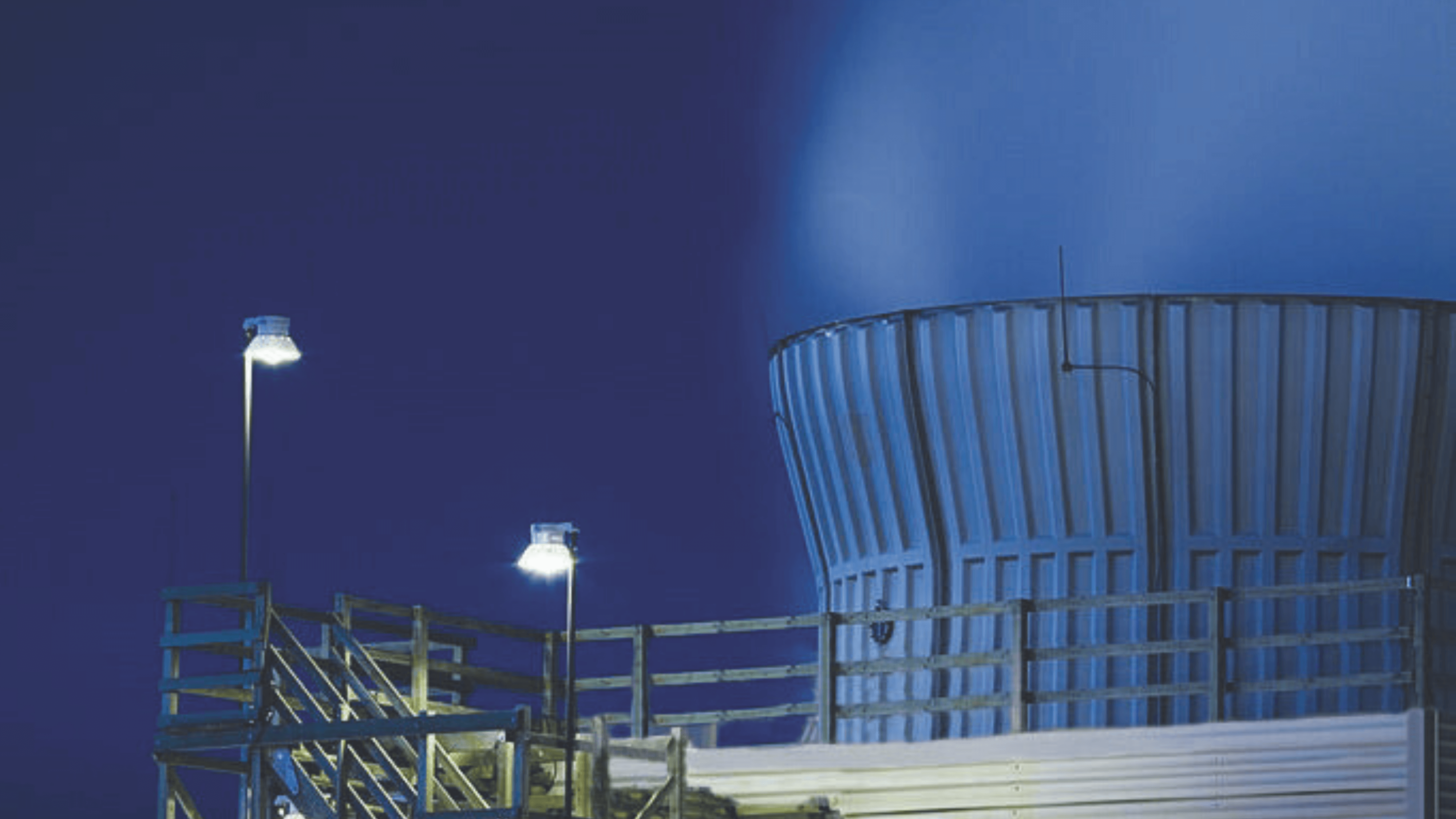
Water Cooling Towers are industrial equipment whose operation is based on the Evaporative Cooling Principle, this has been applied in the industry for more than 100 years. Evaporative cooling is a natural process that uses water as a refrigerant and transfers is applied to transmit excess heat from different processes and thermal machines to the atmosphere. Broadly speaking, evaporative cooling equipment, such as cooling towers, incorporates: a heat exchange surface and moistened mass by means of a water distribution device, a ventilation system (natural or forced) in charge of favoring and, in where appropriate, force the passage of ambient air through the heat and mass exchange filling, and different auxiliary components such as a water collection basin, recirculation pump, droplet separators and control instruments. Next we will explain step by step the operating process of a cooling tower:
How does a Cooling Tower work?
The operation of a cooling tower is based on the principles of evaporative cooling:
Cooling towers cool hot water by spraying it in the form of a rain of drops that fall into an exchanger lattice or filling (a set of thin PVC sheets specifically placed) where they are cooled by means of an air stream, which flows in In the opposite direction, the already cooled water falls into a tank that collects it and, where appropriate, will be distributed through a circuit.
Air enters through the lower openings above the water tank and passes through the tower from bottom to top. This entry of air can occur naturally in natural draft towers or forced through strategically placed fans, as we will explain later when we talk about the types of towers that exist.
Heat transfer occurs when water (at a higher temperature) and air (at a lower temperature) come together in the filling of the tower, where the heat exchange between the two fluids takes place. This filling has the purpose of increasing the surface and the contact time between the air and the water, promoting the cooling efficiency. As the water evaporates, it takes the heat it needs from the rest of the circulating water, cooling it.
In this process, approximately 1% of the total water flow evaporates for every 7ºC of cooling. This water that comes out of the evaporated tower is filtered through the so-called "droplet separator". This is one of the most important elements for the safety of a cooling tower, since it avoids the risk of water contaminated by the Legionella bacteria freely going outside. This element, which has losses of less than 0.002%, efficiently reduces the expulsion of water into the atmosphere as dictated by the UNE 100030/2017 standard. According to this standard and for safety, the drift separators must be replaced every 10 years.
The rest of the chilled water is deposited in a basin that sends it to a circuit that will use this chilled water in different applications (air conditioning, air treatment units, industrial processes, etc.)

TYPES OF COOLING TOWERS.
According to its design, we can find different types of Cooling Towers or Cooling Towers. The fundamental difference between one and the other lies in the way in which they intrude the air into the tower to cool the water, which can be naturally or forced by fans.
Natural Draft Cooling Towers:
The necessary air flow is obtained as a result of the difference in density between the coldest air outside and the humid air inside the tower. They use tall chimneys to get the desired draft. Due to the large dimensions of these towers, water flows of more than 200,000gpm are used. They are widely used in thermal power plants.
Induced Draft Cooling Towers:
In this type of tower, the air is sucked in by a fan located at the top of the tower. They are the most used because they are more efficient than other models.
Forced Draft Cooling Towers:
The air is forced by a fan located at the bottom of the tower and is discharged from the top. These types of towers are less efficient since the download speed is lower.
Cross Flow Cooling Towers:
Air enters the sides of the tower by flowing horizontally through the falling water. These towers need more air and have a lower operating cost than countercurrent towers.
 Next
Next at Thermal Cooling Tower ...


We will assign one of our Cooling Tower experts.
OUR COMMERCIAL PARTNERS